2026-08-26 · 3 min read · San Tan Valley
The True Cost of Feeding a Horse in Arizona
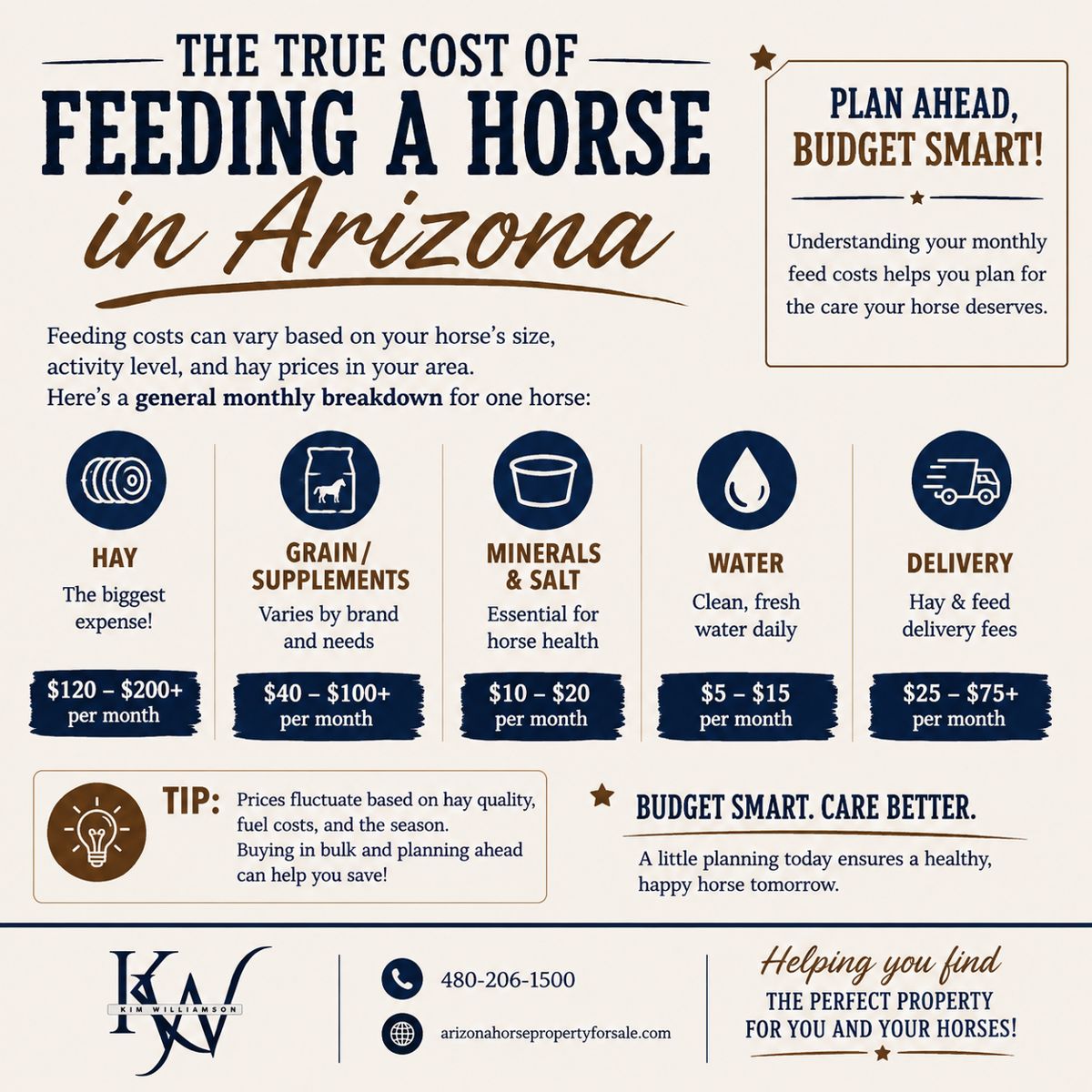
What This Guide Covers
Buyers thinking about their first horse property almost always budget for the mortgage, the barn, and the fencing. Almost nobody budgets properly for hay, and it is a real, year-round line item out here, not an occasional expense.
Written by Kim Williamson of REAL Broker. Kim has sold real estate in the East Valley for 24 years, including San Tan Valley, and has owned and designed three horse properties of her own.
Why Hay Is Non-Negotiable in the Desert
Unless a property has active flood irrigation supporting real pasture, there's no natural grazing on desert land. That means hay isn't a supplement to grazing the way it might be in a grassier climate, it's the primary feed source, every month, all year.
What It Actually Costs Right Now
Current small square bale pricing runs roughly $12 to $19.50 per bale depending on type and quality, alfalfa premium and good-quality bales running around $12 to $12.50, and Bermuda grass bales running higher, around $18.50 to $19.50. On a per-ton basis, Arizona hay has been averaging around $235. Regional scarcity and trucking costs are real factors here, hay in drought-prone areas like Arizona often runs higher than in hay-producing regions, purely because of what it costs to get it here.
Where Arizona's Hay Actually Comes From
Most of it isn't grown in the East Valley itself. Yuma is the largest in-state source, with additional supply from Coolidge, Eloy, Casa Grande, Stanfield, and Buckeye, plus pockets of production in San Tan Valley. A meaningful share of Timothy grass hay gets trucked in from Colorado, and additional shipments come from Texas, Nevada, and Idaho depending on the season. That supply chain is part of why prices move, a bad season somewhere else can affect what you pay here.
Prices Spike in Winter. Budget for It
Hay pricing isn't flat throughout the year. Bales that run in the mid-teens in summer have historically spiked toward $25 a bale between October and April in past seasons. Budgeting off summer pricing alone is a common first-year mistake, plan your annual hay budget around the higher winter number, not the lower summer one.
Pellets as a Supplement or Alternative
Many local farms also offer pelletized feed, sold by the bag, tote, or bulk silo-fill in 3 to 5 ton quantities, either straight or as a Bermuda-alfalfa blend. Pellets generally waste less than loose bales and can be a useful supplement or partial replacement depending on your setup and herd size.
Questions to Ask Before You Budget
1. What's the realistic monthly hay cost for the number of horses I actually plan to keep, priced at winter rates, not summer rates?
2. Is there a reliable local supplier, or will hay need to be trucked in from farther away?
3. Does pelletized feed make sense as part of my feeding plan, and what does that add to the monthly cost?
4. Am I budgeting hay as a year-round expense, not a seasonal one?
The Bottom Line
Hay is one of the most consistently underestimated costs in first-year horse property ownership. Price it at winter rates, understand where your supply is actually coming from, and build it into your budget as a true monthly fixed cost, not an afterthought.
Hay pricing is time-sensitive and reflects general 2026 market data current as of this writing. Always verify current pricing directly with local suppliers before budgeting.
Get Help With Your San Tan Valley Property
If horse property is on your list, Kim can walk it with you. Read horse property with Kim, check San Tan Valley real estate and horse property, see horse property in San Tan Valley, and contact Kim Williamson at 480-206-1500 when you are ready.