2026-08-12 · 3 min read · Queen Creek
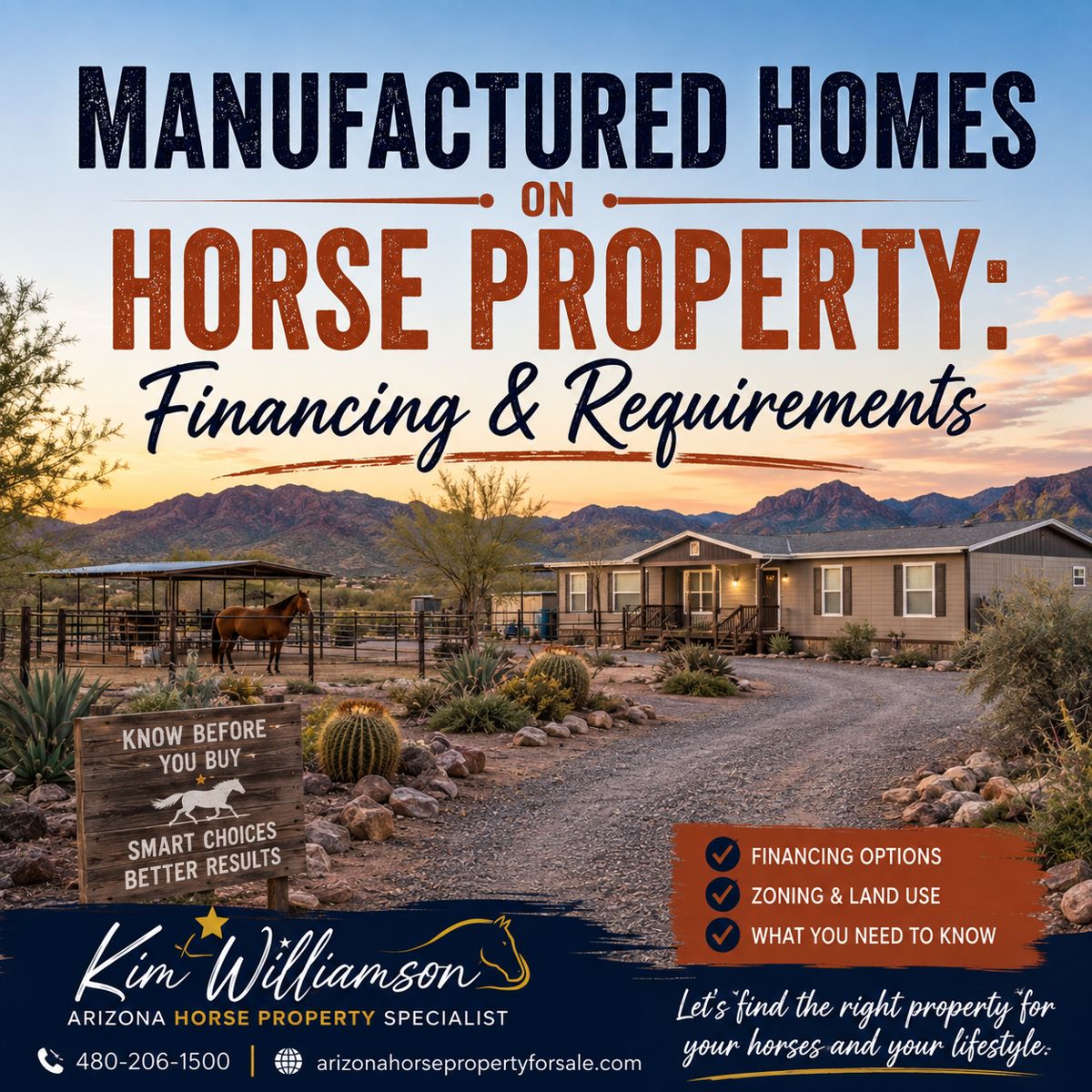
Manufactured Homes on Horse Property: Financing & Requirements
Where to Start
A real share of East Valley acreage, especially larger parcels and manufactured-home-friendly zoning outside the incorporated cities, carries a manufactured home instead of a stick-built one. That's a completely different category from a site-built home, with its own rules, and treating it like a normal single-family purchase is where buyers get into trouble.
The HUD Basics
To qualify as a manufactured home under federal standards, the unit must have been built after June 15, 1976, and carry both a HUD Data Plate and a HUD Certification Label. Newer lending guidelines allow existing homes to qualify with just one of the two documents present, but new construction still requires both. If those labels are missing on a home you're considering, that's not a minor paperwork gap, it can require formal verification through the Institute for Building Technology and Safety or the manufacturer before a lender will touch it.
Permanent Foundation Requirements
For a manufactured home to qualify for standard financing. FHA, VA, or conventional, it has to sit on a permanent foundation system: either a slab/stem wall foundation or a state-approved equivalent, with the installation design sealed by a registered Arizona engineer. Before installation, Arizona requires a site and soil assessment, a check on local frost-line requirements, an installation permit, and a certificate of occupancy from the Arizona Department of Housing before anyone moves in. Skipping any of these steps doesn't just risk a fine, it can make the home unfinanceable down the line.
This article comes from Kim Williamson, REALTOR® with REAL Broker, 8x WPRA World Champion, and a Queen Creek horse property specialist with 24 years in real estate.
The Financing Rule That Trips Up the Most Buyers
Here's the one that catches people off guard: if a manufactured home has been physically moved more than once, it will not qualify for standard financing. Lenders, conventional and VA both, require that the home has moved exactly once: factory to its current site. A second move effectively takes it out of the financeable pool for most buyers. This is one of the most important things to verify before you fall in love with a manufactured home on acreage, ask directly how many times it's been moved, and get it in writing.
Hurricane Strapping and Other Structural Requirements
Even though Arizona isn't a hurricane state, manufactured homes here are still required to carry hurricane strapping as part of the HUD construction standard, this is a national requirement tied to the home's certification, not a regional weather rule. It's a common point of confusion I hear from buyers who assume it doesn't apply here. A quick correction on a related myth: Arizona's water heater code requires proper structural support and 36-inch clearance, that's a different requirement from seismic strapping, which is a California standard and doesn't apply here.
Questions to Ask Before You Buy a Manufactured Home
1. Does the home have both a HUD Data Plate and Certification Label, or documentation covering the missing one?
2. Was the home built after June 15, 1976?
3. How many times has this specific home been physically moved, and is that documented?
4. Is it on a permanent foundation with a certificate of occupancy on file?
5. Has hurricane strapping been verified as part of the original installation?
The Bottom Line
Manufactured homes are a completely separate financing category from site-built homes, and the single biggest factor most buyers overlook is move history. Verify the HUD documentation, the foundation status, and the number of moves before you fall in love with a property, because any one of those three can be the difference between an easy close and a financing dead end.
Financing and construction requirements are general information current as of this writing and vary by lender. Always confirm specific requirements with your lender and the Arizona Department of Housing before purchase.
Where to Go From Here
Every parcel is different, so the next step is a conversation about yours. Start with Queen Creek real estate and horse property or selling a manufactured home on acreage with Kim, then look at selling a manufactured home on acreage in Queen Creek. When you are ready, talk with Kim about your Queen Creek plans.