2026 Cost to Build a Barn or Arena: What Owners Actually Pay
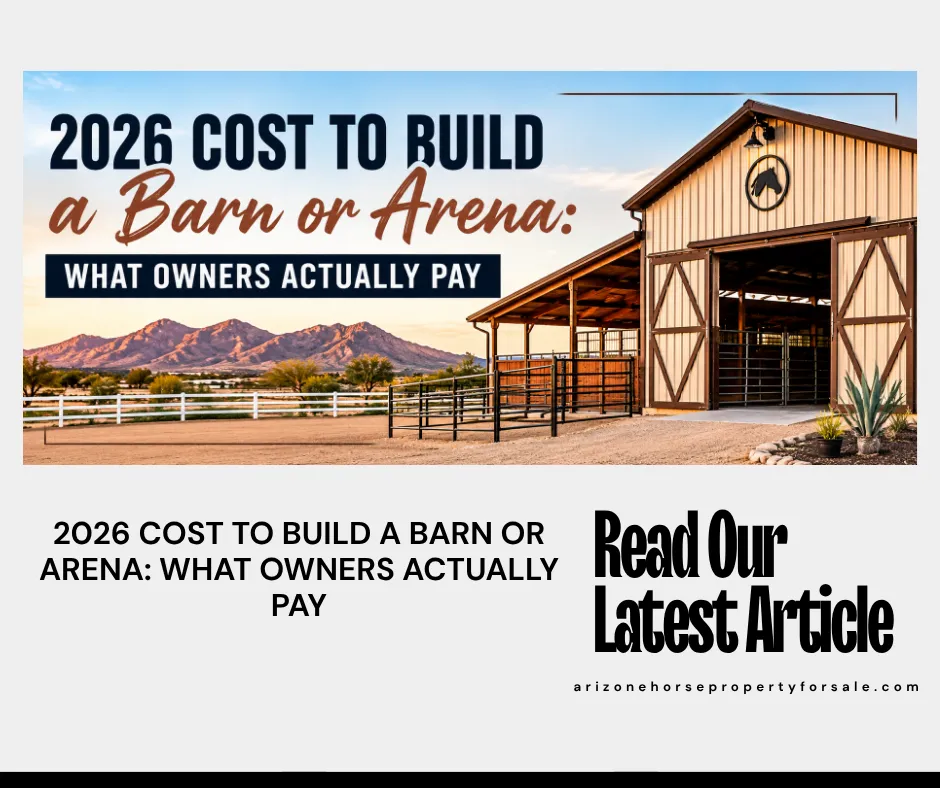
2026 Cost to Build a Barn or Arena: What Owners Actually Pay
If you're buying land specifically to build out your own barn or arena, the "how much" question deserves real numbers, not a vague "it depends." Here's the honest breakdown — including why the range is so wide in the first place.
Fencing by Type (Material Costs Only)
Installation labor varies enormously from builder to builder — their crew size, experience, and site conditions all move that number independently of materials. So these ranges are material cost only; get a labor quote separately from whoever you hire.
Oil Field Pipe Fencing (paired with No-Climb Mesh) — Pipe material alone runs roughly $11.50 to $34 per linear foot, depending on pipe size and grade. It's commonly paired with no-climb mesh wire for horse safety, which runs $1.50 to $3.50 per linear foot in material. This pipe-plus-mesh combination is one of the most common, durable setups for horse properties nationwide.
Sucker Rod — A premium, extremely durable option, often run in the same style as pipe. Material pricing isn't consistently published by suppliers — this is one to get a direct quote on rather than assume a number.
Panel Systems (Portable) — Modular panels work for arena fencing, perimeter fencing, or barn stalls, and can be reconfigured or moved later. Suppliers typically quote panels as complete units rather than breaking out raw material separately, so a clean materials-only figure isn't consistently published — confirm directly with a supplier.
Barn Shell Material Costs
Metal or pole barn shell materials alone typically run $10 to $30 per square foot — installation labor sits on top of that and varies significantly by builder. Timber-frame material costs run higher, though a clean materials-only figure wasn't consistently available across sources; expect a real premium over metal.
What Actually Happened on a Real Build
I've helped clients design and build out their own horse properties more times than I can count, and I've personally designed three of my own — so this isn't a number pulled from a generic guide. For scale: my own 165' x 325' arena — roughly 53,600 square feet — with five large cattle pens, a covered hay structure, an automatic sprinkler system, a 5,000-gallon water tank, a 7.5 HP pump, and stadium lighting came in around $100,000 total. My 6-stall barn, built with oilfield pipe, hard-plumbed for automatic waterers, installed feeders, two-bay hay storage, and a 20' x 40' tack room and shop, also landed around $100,000. Those are real numbers from my own project's specific site, labor market, and feature list — treat them as one real data point, not a formula.
Why Installation Costs Vary So Much
The material ranges above are fairly consistent — installation is where the real spread happens. A builder with twenty years of experience building luxury equestrian facilities prices differently than a general contractor tackling his first arena. Years in the field, whether they specialize in equestrian construction versus general ag building, their current workload and timeline availability, and the finish level you're asking for — purely functional versus show-quality luxury — all move labor pricing independently of the materials themselves. Two builders quoting the exact same pipe and mesh can land tens of thousands of dollars apart on installation alone, and that's not a red flag — it's the cost of expertise and a build that's actually done right the first time.
The Arizona Factor: Do You Even Need Indoor?
Many national cost guides assume an indoor arena is the default for serious riders dealing with snow and rain. Here, the bigger climate challenge is summer heat, not precipitation, so a covered (open-sided) arena with good shade and airflow often serves East Valley riders better than a fully enclosed building, at a fraction of the cost.
Sizing Guidance
A basic private-use arena runs around 60 by 120 feet. Riders doing jumping or multi-horse lesson programs typically want closer to 80 by 200 feet. Competition dressage arenas run as large as 100 by 200 feet or more. Legal rodeo arena size varies by association and event, but 150 by 300 feet is generally the standard. Sizing up during initial design is far cheaper than expanding later — adding footprint after the slab is poured commonly costs close to double what it would have cost at the design stage.
Questions to Ask Any Builder Bid
1. Does your quote break out material cost from labor separately, so I can compare it against other bids apples-to-apples?
2. What's your experience with equestrian-specific builds versus general ag construction?
3. What fence or stall material are you quoting — no-climb mesh, oil field pipe, sucker rod, or panel — and why?
4. What footing type is included, and does it match your riding discipline?
5. What's the realistic timeline given your current workload, and how does Arizona's summer heat affect the build schedule?
The Bottom Line
Materials are the predictable part of this budget — installation is where a builder's experience, specialization, and current workload create real spread. Get at least two current bids that separate material from labor, and weigh the builder's equestrian-specific track record as heavily as the number on the page.
Ready to find land with the right space and setback for what you want to build? Call or text Kim Williamson at 480-206-1500 or visit www.ArizonaHorsePropertyForSale.com.
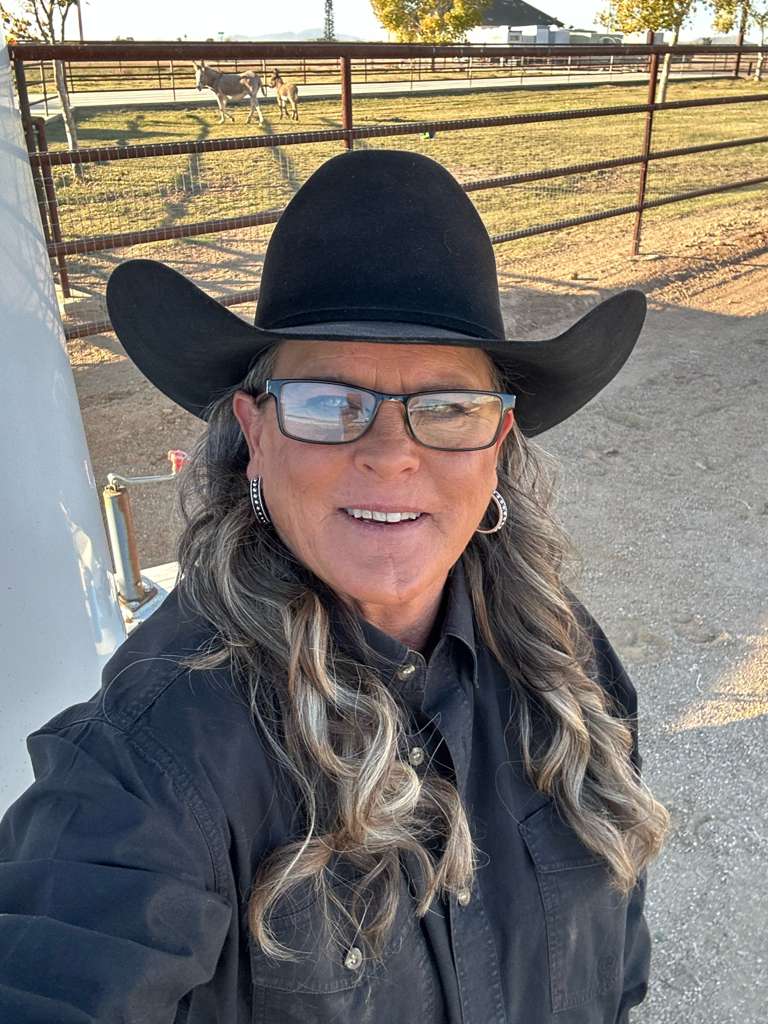
Kim Williamson, REALTOR® | 8x WPRA World Champion | 24 years East Valley experience | Real Broker | 480-206-1500 | arizonahorsepropertyforsale.com
Cost figures reflect national 2026 material pricing guides and general estimates, not Arizona-specific supplier quotes. Always get local bids before budgeting.