The First-Time Horse Property Buyer's Guide
The First-Time Horse Property Buyer's Guide
If this is your first time buying acreage, the biggest mistake I see isn't a bad decision — it's not knowing which questions to ask in the first place. A horse property purchase touches water rights, zoning, financing, and infrastructure in ways a standard subdivision home never does. Here's the complete rundown, in the order I actually walk clients through it.
Water: Don't Assume, Verify
"It has irrigation" or "it has a well" are starting points, not settled facts. If a property has flood irrigation, confirm which specific district serves it — SRP, Roosevelt Water Conservation District, or Queen Creek Irrigation & Drainage District all cover different parts of the East Valley with different boundaries, fees, and delivery rules. Verified, active flood irrigation rights can add real value to a property, often in the tens of thousands of dollars, compared to a similar property running on a standard sprinkler system. If the property runs on a well instead, confirm the pump capacity, depth, permitting status, and — critically — whether the water has ever been tested for arsenic, which occurs at elevated levels in a meaningful share of Arizona wells, particularly in the Salt River Valley basin. Arizona doesn't require private well testing at any interval, so an untested well isn't unusual — it's just something you need to arrange yourself before closing.
Zoning: Know What You're Actually Allowed to Do
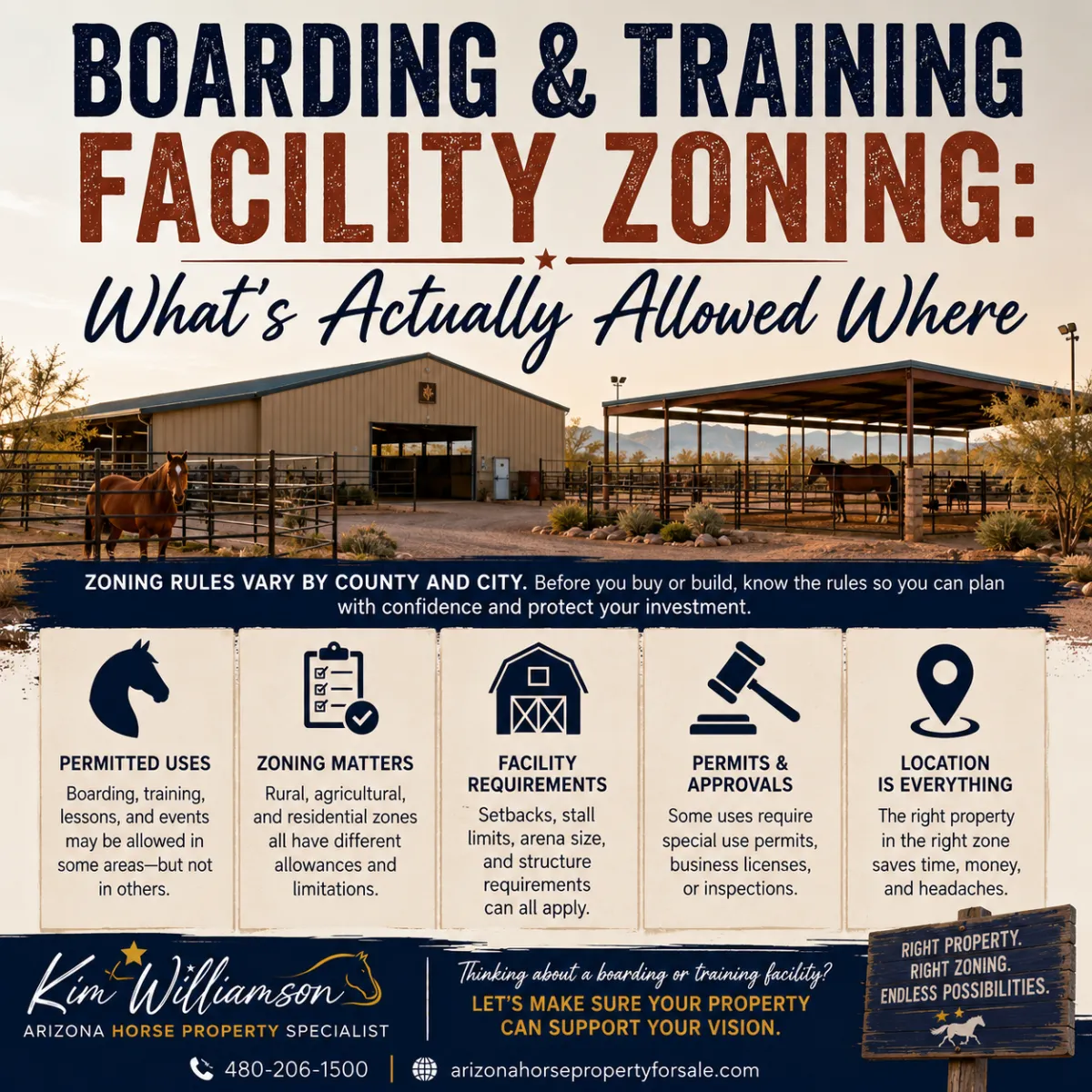
If any part of your plan involves boarding other people's horses, giving lessons, hosting events, or running any kind of equestrian business, don't assume the zoning supports it just because the property has acreage and a barn. Commercial equine use typically requires a minimum acreage threshold and often a Special Use Permit, and the exact rules — including setback requirements for barns and stables — vary by municipality and county. Confirm zoning and permitted use directly with the county or city before you buy with a business plan attached.
Financing: Site-Built vs. Manufactured Are Different Worlds
A stick-built home and a manufactured home are financed under completely different rules. Manufactured homes need to be built after June 15, 1976, carry proper HUD documentation, sit on a permanent foundation, and — this is the one that catches people off guard — ideally have only been moved once, from the factory to their current site. A home moved multiple times becomes significantly harder to finance, sometimes impossible depending on the lender. Never assume a manufactured home financing situation mirrors a site-built one.
Infrastructure: Materials Are Predictable, Labor Isn't
If you're planning to build a barn or arena rather than buy one already built, understand that material costs — fencing, shell construction — are relatively consistent and quotable. What swings wildly is installation labor, which depends entirely on the builder's experience, specialization in equestrian construction, and current workload. Get at least two bids that separate material from labor so you're actually comparing apples to apples.
Lifestyle: Trails, Gear, and What You're Actually Buying Into
If riding access matters to you, factor proximity to a regional park or private trail-out arrangement into the search the same way you'd factor in acreage or zoning. And if you're new to desert riding, build in real prep — water, wildlife awareness, proper gear, and sunscreen aren't optional extras out here.
The Math: Renting, Boarding, or Buying
If you're not ready to buy yet, boarding your horse at a private facility while you search is usually more available and more cost-effective than trying to find a true horse-property rental — that market is thin and inconsistently priced. But run the real math over two to five years: rent and board payments don't come back to you, while buying — even if you eventually resell — isn't the same kind of sunk cost.
My One Piece of Advice Above All the Rest
Visit in July or August before you commit to anything — not December. The postcard version of Arizona and the actual version of Arizona in the middle of summer are two different experiences, and you need to know which one you're signing up for.
Questions to Bring to Every Showing
1. Which water source serves this property, and has it been verified — not assumed?
2. Does the zoning support everything I actually plan to do here, including any business use?
3. If this is a manufactured home, how many times has it been moved, and is the HUD documentation complete?
4. If I need to build, can I get bids that separate material cost from labor?
5. Have I actually experienced this area in peak summer heat, not just in photos or a winter visit?
The Bottom Line
None of this is meant to scare you off horse property — it's meant to make sure you buy the right one, with your eyes open, instead of finding out about a water, zoning, or financing issue after you've already fallen in love with the place. Every one of these questions has a real, verifiable answer. Get them before you buy, not after.
Ready to start your search with someone who'll walk you through every one of these? Call or text Kim Williamson at 480-206-1500 or visit www.ArizonaHorsePropertyForSale.com.
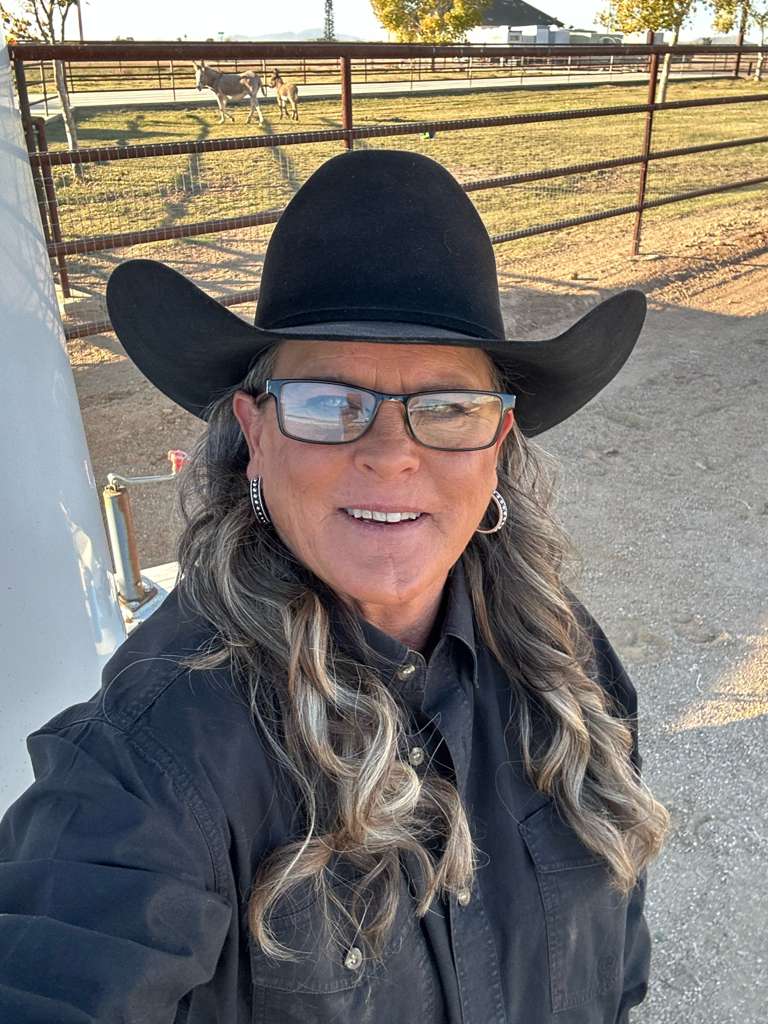
Kim Williamson, REALTOR® | 8x WPRA World Champion | 24 years East Valley experience | Real Broker | 480-206-1500 | arizonahorsepropertyforsale.com
This guide summarizes general information current as of this writing. Always verify specifics for any individual property directly with the relevant district, county, city, or lender before purchase.